
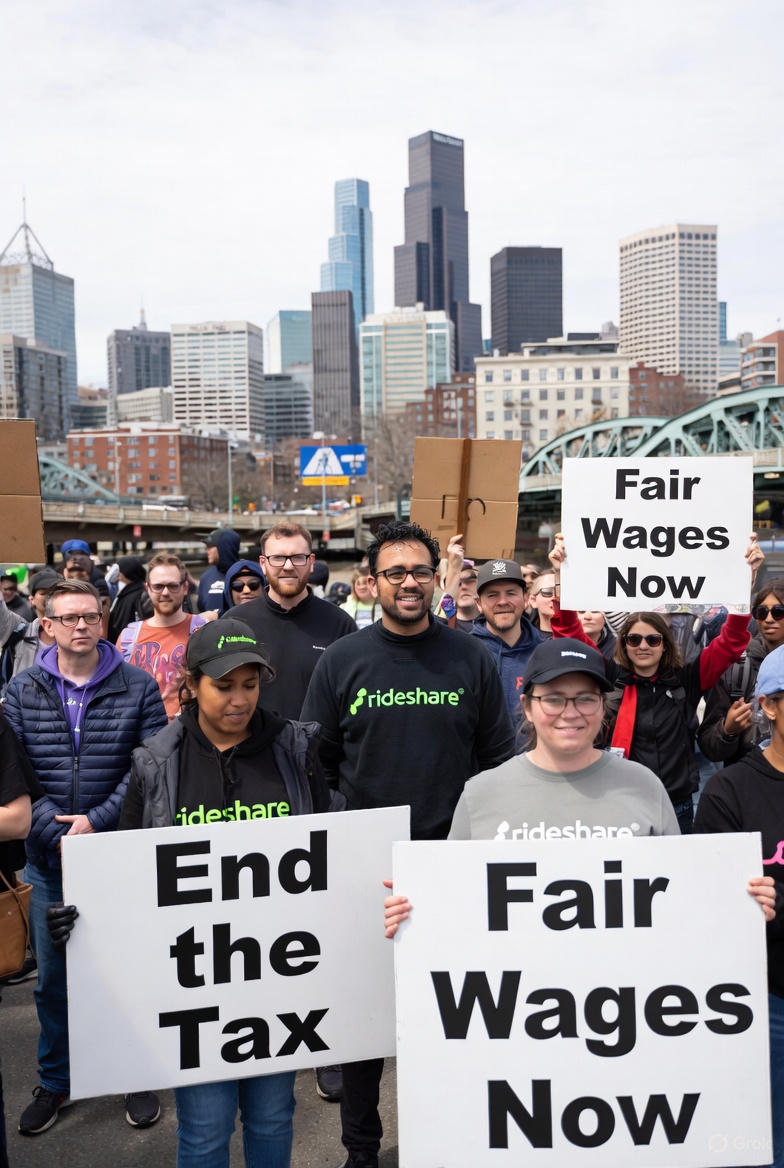
In the bustling streets of Portland and beyond, Uber and Lyft drivers power Oregon’s urban mobility, yet they’re routinely denied the basic labor protections afforded to employees—minimum wage guarantees, overtime pay, workers’ compensation, and more. Classified as “independent contractors,” these drivers face exploitation under a facade of flexibility, earning as little as $6–$8 per hour after expenses while bearing all the risks of the job. But Oregon law demands a closer look: under the state’s worker classification rules, rideshare drivers overwhelmingly qualify as employees, not contractors. Reclassifying them isn’t just fair—it’s legally mandated, entitling drivers to at least minimum wage after expenses, plus 100% of tips, before any further protections kick in.
Oregon’s Legal Framework for Worker Classification
Oregon employs a dual approach to distinguish employees from independent contractors, ensuring businesses can’t dodge responsibilities through clever labeling. For wage and hour laws (including minimum wage under ORS 653), the Oregon Bureau of Labor and Industries (BOLI) applies the common law test, a multi-factor analysis focusing on behavioral control, financial control, and the type of relationship. This test, rooted in IRS guidelines but adapted for state enforcement, weighs the “reality of the working relationship” over any contract language.
Additionally, for unemployment insurance and certain professions, Oregon uses the strict ABC test under ORS 670.600: A worker is an independent contractor only if (A) they’re free from the hiring entity’s direction and control; (B) the service is outside the entity’s usual business; and (C) they customarily engage in an independent trade, occupation, or business of the same nature. Failure on any prong defaults to employee status.
In 2015, BOLI’s advisory opinion explicitly applied these tests to Uber drivers, concluding they are employees due to the platforms’ pervasive control and the drivers’ integral role in the business model. A decade later, amid ongoing lawsuits and legislative pushes like Senate Bill 1166 (which grants partial protections without full reclassification), the case remains compelling—and urgent. Here’s why rideshare drivers fail both tests.
Behavioral Control: Platforms Dictate Every Aspect of the Job
True independent contractors operate with autonomy, setting their own methods and schedules without oversight. Rideshare drivers? Not even close.
- Assignment of Work: Uber and Lyft unilaterally assign rides via algorithms, dictating when, where, and to whom drivers provide service. Drivers can’t solicit clients independently or negotiate directly—every trip flows through the app, mirroring an employer’s dispatch system. Under the common law test, this “right to control the details” screams employee status.
- Penalties for Rejection: Reject too many assigned rides, and drivers face deactivation or lower priority—effectively a disciplinary measure. This isn’t flexibility; it’s enforced compliance, failing ABC prong A (freedom from control) and tipping behavioral control toward employment.
- At-Will Deactivation: Platforms can—and do—cancel drivers “at any time for no reason,” often based on opaque ratings or complaints without due process. This mirrors at-will employment termination, not a contractor’s project-based engagement. BOLI’s 2015 opinion highlighted this indefinite, ongoing relationship as a key employee indicator.
These controls extend to performance standards: mandatory background checks, vehicle inspections, and even route suggestions via GPS. Drivers aren’t running their own show—they’re executing the platform’s playbook.
Financial Control: No Real Opportunity for Profit or Loss
Independent contractors invest in their business, negotiate rates, and bear entrepreneurial risks. Rideshare drivers, however, are locked into a rigid pay structure with minimal agency.
- No Minimum Fare Setting: Drivers can’t set their own prices or refuse lowball fares without penalty. Fares are algorithmically determined by Uber and Lyft, leaving drivers as mere takers in a controlled marketplace. This erodes financial independence, a core common law factor.
- Expense Absorption Without Investment: While drivers cover gas, maintenance, and insurance (a pro-contractor point), they lack the upside of true business ownership. No marketing budgets, no scaling operations—just per-ride payouts that fluctuate with platform surges, not driver initiative. The 2024 DOL economic reality test, influencing Oregon’s framework, emphasizes this lack of “opportunity for profit or loss through managerial skill.”
- No Transferable Assets: Drivers can’t build or sell a “book of business”—client lists, routes, or goodwill are proprietary to the platform. Your five-star rating? It vanishes if you switch apps. This permanence binds drivers financially to one entity, underscoring employee-like dependence.
Type of Relationship: Integral, Indefinite, and Unprotected
The relationship’s nature seals the deal. Rideshare drivers are the beating heart of Uber and Lyft’s core business—transportation services—not some peripheral add-on. This dooms them under ABC prong B: their work is inside the usual course of business, not outside.
Moreover:
- Lack of Independent Trade (ABC Prong C): Most drivers don’t maintain a separate business entity, advertise services, or work for multiple clients outside the apps. They’re gig workers reliant on the platform for leads, tools (the app), and payment processing—not established entrepreneurs.
- Permanence and Exclusivity: The ongoing, exclusive nature of the engagement—often full-time hours without a fixed end—evokes traditional employment. Non-compete clauses and app-only work further restrict mobility.
- No Bargaining Power: Contractors negotiate terms; employees accept company policies. Drivers must adhere to one-sided terms of service, with no input on commissions (up to 40% skimmed by platforms) or dispute resolution.
These factors align with federal precedents, like the NLRB’s scrutiny of gig autonomy, where “near-absolute” freedom is illusory amid algorithmic oversight.
The Stakes: Minimum Wage Plus Tips, and Beyond
If reclassified as employees, Oregon rideshare drivers would be entitled to the state’s minimum wage—$15.95 in Portland metro as of 2025—after deducting verifiable expenses like mileage, but before tips, which must pass through 100% intact. This floors earnings at a living wage, curbing the poverty trap of sub-$10 hourly nets. Add overtime for 40+ hour weeks, meal/rest breaks, and anti-retaliation safeguards, and the transformation is profound.
Legislative half-measures like SB 1166 offer bandaids—paid sick leave, deactivation appeals—but sidestep the root issue, leaving drivers without full FLSA protections or union rights. True reform demands courts or lawmakers enforce the tests as written.
A Call to the Wheel
Oregon’s laws are clear: Uber and Lyft’s model thrives on misclassification, but it crumbles under scrutiny. Drivers, riders, and advocates must amplify this case—through petitions, testimony, and lawsuits—to secure employee status and the dignity it brings. Visit rideshare101.org to sign on, donate, or get reinstatement help. The road to fair pay starts with reclassifying the drivers who pave it.